
Dido Elizabeth Belle
By Talia Soublet
Dido Elizabeth Belle, commonly known as Dido Belle, was a young mixed-race woman with a strong legacy; not only did she make history that tends to go unnoticed, but as UWF archaeologist Margo Stringfield discovered, Dido also had connections to Pensacola, Florida. She lived a life of complications and yet thrived even though there were differences, whether with her family or societal “norms.” To understand Dido’s story, it’s important to recognize her impact; it helps to look at where she came from and how she navigated a world that was not built for her.
Her early life came with a sense of not belonging. Her mother, Maria Belle, was a Black woman, and her father, John Lindsay, was a white man. They came from completely different worlds — her mother was enslaved, while her father was a Royal Naval officer. Although it is not known exactly how her parents met, some sources say that Lindsay’s ship captured a Spanish slaving vessel in the West Indies, and Maria was one of the enslaved people on board. Her mother ended up getting pregnant and giving birth to Dido in June of 1761. She was born into slavery but not enslaved, unlike her mother. It is confirmed that from 1764 to 1765, during the time that Pensacola was owned by Spain, Dido spent a little bit of her childhood in Pensacola, because her father, Officer Sir John Lindsay, was stationed here.
At the age of four, Dido’s father brought her to England to live with her great uncle Lord Mansfield, his wife, and Dido’s cousin Lady Elizabeth Murray in Kenwood House. Both girls were brought up together and cared for by both Lord Mansfield and his wife. Dido was well educated, treated with care and protection, which was unusual during the 1700s. Even though she was cared for, she was not fully treated like an equal. She was in between the two worlds; not a servant, but also still limited by racism and social rules.
Dido was described as a well-educated gentlewoman, and her uncle even trusted her to be his assistant. This position was usually reserved for men, and her uncle even trusted her to be responsible for parts of his estate, which meant that she would supervise the dairy and poultry yard. Doing this showed that she held a respected place in her uncle’s household, but Dido was so accomplished and trusted by her uncle that others’ options didn’t compare, not to mention her uncle was the Lord Chief Justice of England, which is the highest judge in the British legal system.
During Dido’s time at the estate, she received a financial report that was usually given to members of aristocratic families, which included an annual allowance, gifts, and clothing, and after her uncle’s death in 1793, she received an inheritance in his will. This alone shows the important parts Dido played in the household, not as a servant but as an equal, and she deserved long-term stability.
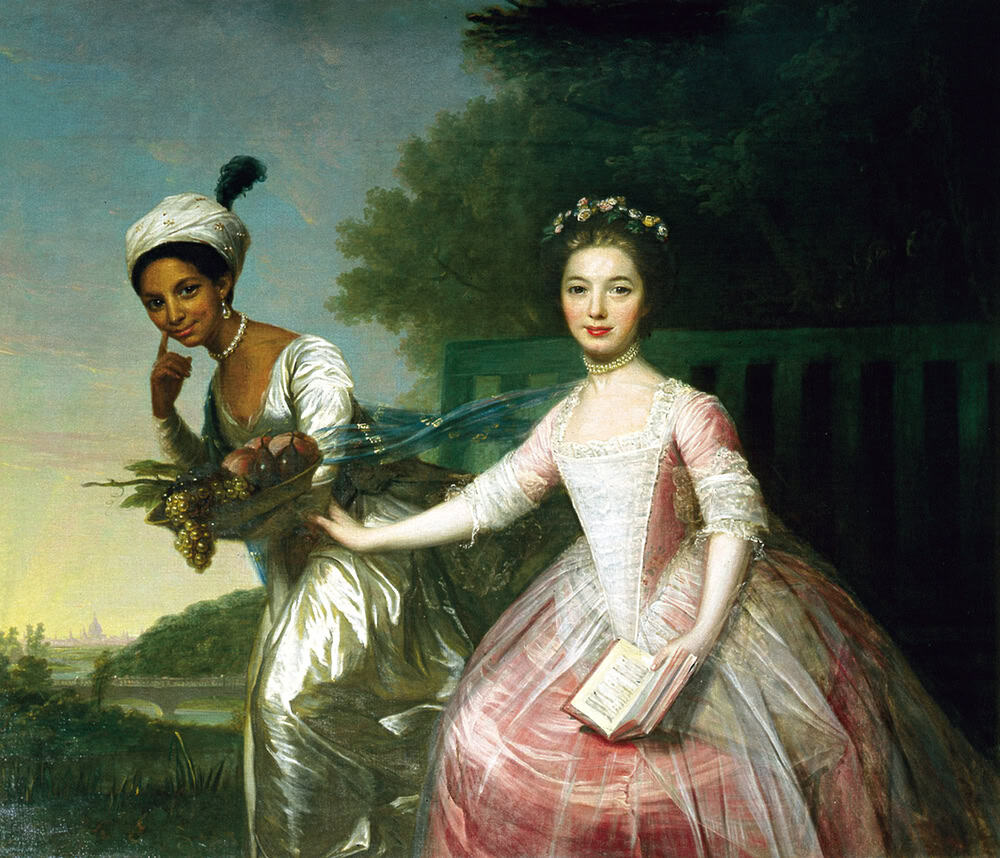
One of the most important parts of Dido’s legacy is the famous portrait of her standing beside her cousin, Lady Elizabeth Murray. In the 1700s, Black people in European art were always painted as servants in the background, but Dido is shown as a companion — confident, well‑dressed, and full of personality. This portrait is considered groundbreaking because it is one of the earliest known depictions of a Black woman presented with dignity and status rather than servitude. The painting shows how unusual Dido’s position in the Mansfield household was and highlights the respect she held within her family.
Overall, the life of Dido Elizabeth Belle was extraordinary. She was a woman who beat the odds and built a life not only for herself but for her children, Charles, John, and William Thomas Daviniere. Dido’s life shows us that no matter where you come from, it does not determine where you are going.